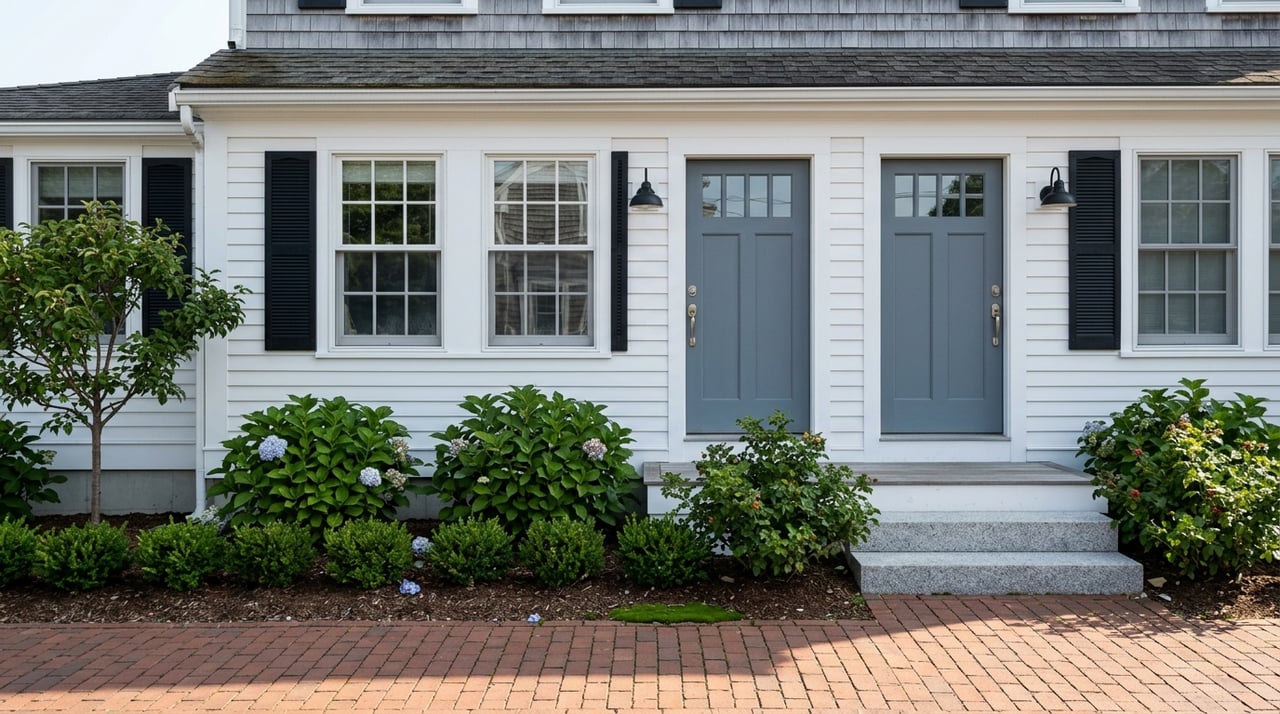
Are you trying to decide whether a condo or a single-family home makes more sense in Falmouth? It is a common question, especially in a market where prices are high, inventory can feel tight, and the right fit depends as much on lifestyle as it does on budget. If you understand how each option works in Falmouth, from maintenance and monthly costs to sewer, septic, and coastal considerations, you can make a much more confident choice. Let’s dive in.
Falmouth Housing Starts With Context
Falmouth is still, by a wide margin, a single-family home market. According to the Town of Falmouth’s 2024 Housing Production Plan, detached single-family homes make up 89.4% of residential properties, while condominiums account for 6.3%.
That matters because your choices will not be evenly split between the two property types. You will usually see more houses available across town, while condo opportunities tend to be more limited and more location-specific.
The same town data also shows a meaningful price difference. Average assessed values were listed at $772,248 for detached single-family homes and $489,531 for condos, with condos showing a newer median build year of 1986 compared with 1974 for single-family homes.
In the broader market, Falmouth remains expensive by Massachusetts standards. Realtor.com shows a median listing price around $1.10 million for Falmouth overall, while Redfin reported a March 2026 median sale price of $796,000. Those are different measurements, but together they point to the same reality: whether you are considering a condo or a house, you are shopping in a high-price market.
Condo Living in Falmouth
A condo can be a strong fit if you want ownership with fewer day-to-day exterior responsibilities. In Falmouth, that often appeals to downsizers, second-home buyers, or anyone who wants a simpler property to manage.
That said, condo ownership is not the same as renting and it is not maintenance-free. Under Massachusetts condo law, you own your unit and also share an interest in the common areas through the condominium association.
What You Usually Gain With a Condo
For many buyers, the biggest advantage is predictability. Instead of handling every exterior project yourself, you are typically sharing responsibility for items like grounds, building exteriors, and common spaces through monthly condo fees.
Current Falmouth listing examples show that condo fees can cover a range of services and amenities, depending on the property. Some listings reference coverage for insurance, professional management, grounds maintenance, pool access, clubhouse access, and even sewer service in certain cases.
That setup can make a condo especially attractive if you want a lower-effort seasonal property or a home base close to village amenities. It can also help if you would rather budget around a recurring monthly fee than face more unpredictable exterior repair costs on your own.
What You Still Need to Review Carefully
A condo does not remove financial responsibility. Massachusetts guidance notes that associations are central to the ownership model, and replacement reserve funding is part of common expenses.
You also need to understand the insurance structure. The association’s master policy usually covers the building and common areas, while you as the unit owner need insurance for what falls outside that master policy.
Another key point is the possibility of special assessments. Even if monthly dues seem manageable, association agreements can allow additional charges after a loss or for major projects, so it is important to review the documents carefully.
Where Condo Inventory Tends to Cluster
In Falmouth, condos are not spread evenly across town. A recent public listing snapshot showed 4 condo listings in Falmouth Village, 9 in East Falmouth, 2 in North Falmouth, and none in West Falmouth.
That is only a snapshot, but it helps illustrate a larger pattern. If condo living is your goal, you may find more options near village-style areas and fewer choices in lower-density parts of town.
Condo Does Not Always Mean Small
It is easy to picture a condo as a compact one-bedroom unit, but that is not always the case in Falmouth. Public listings have included everything from a $325,000 one-bedroom village unit to a $1.049 million Main Street residence with substantial monthly dues, plus free-standing condo ownership in North Falmouth.
So the better question is not just “condo or house?” It is also “what kind of condo?” In Falmouth, that can range from a simple lock-and-leave property to a larger residence with shared ownership structure.
Single-Family Living in Falmouth
If you want more land, more privacy, and more control, a single-family home will usually give you that. It is also the most common form of ownership in Falmouth, so your search will generally include a much wider range of locations and property styles.
Single-family homes are found throughout Falmouth’s villages rather than concentrated in just a few developments. Current listing snapshots show houses in East Falmouth, North Falmouth, and West Falmouth, with lot sizes and home sizes that vary significantly.
What You Usually Gain With a House
The biggest benefit is control. You are not sharing decisions about the roof, siding, yard, parking, or exterior appearance with an association in the same way you would in a condo setting.
That flexibility can matter a lot if you want to personalize the property over time. It can also be important if your priority is outdoor space, storage, privacy, or room for future changes.
What You Take On as the Owner
With that freedom comes full responsibility. On Cape Cod, owning a single-family home often means handling roof and siding upkeep, landscaping, snow removal, and ongoing maintenance of major systems.
In Falmouth, wastewater is one of the biggest issues to understand before you buy. The town operates two municipal wastewater systems, and sewered areas include portions of Falmouth Heights, Maravista, Teaticket, Main Street/Davis Straits, Woods Hole, and the New Silver Beach area of North Falmouth.
If a home is outside a sewered area, it may rely on a septic system or cesspool. Falmouth states that septic tanks should generally be pumped at least every three years.
That is only part of the picture. The Board of Health adopted a new septic regulation effective November 15, 2025, requiring best available nitrogen-reducing technology in Nitrogen Sensitive Areas when wastewater flow increases because of new construction, raze-and-rebuild projects, or added bedrooms.
If you are thinking about renovations, expansion, or changing a home’s bedroom count, this is a major due-diligence item. In my experience, this is where technical review becomes especially valuable, because the house itself is only part of the decision. The site conditions and wastewater setup can have a real impact on what you can do later.
Coastal Location Matters for Both Choices
Whether you choose a condo or a single-family home, Falmouth’s coastal setting affects the decision. The town has 68 miles of shoreline and 10 public beaches, and it identifies storm, flood, and erosion risk in areas including Woods Hole, East Falmouth, West Falmouth, and downtown.
That means you should evaluate flood exposure property by property, not just by general area. A home’s address, elevation, and map location matter more than broad assumptions.
For some buyers, this makes a condo feel simpler because exterior maintenance may be shared. For others, a single-family home still wins because the privacy and control outweigh the extra responsibilities.
Either way, coastal due diligence should be part of your process from the beginning. It is much easier to compare options when you understand flood-zone exposure, infrastructure, and maintenance implications before you commit.
Lifestyle Can Tip the Scale
Sometimes the best choice is less about square footage and more about how you want to live in Falmouth. If you picture yourself wanting village convenience, fewer exterior chores, and an easier lock-and-leave setup, a condo may line up well with your goals.
That logic fits with another local feature: the Shining Sea Bikeway runs 10.7 miles through four villages from Woods Hole to North Falmouth. While that is not a rule for where condos should be, it helps explain why some buyers are drawn to lower-maintenance living near village centers, Main Street areas, or bike-accessible parts of town.
If your ideal setup includes a yard, more separation from neighbors, private parking, and the ability to make changes over time, a single-family home may be the better match. In Falmouth, many buyers are really deciding between convenience and control.
A Simple Way to Decide
If you are weighing both options, it helps to compare them side by side.
| Factor | Condo | Single-Family Home |
|---|---|---|
| Maintenance | Lower exterior responsibility | Owner handles most upkeep |
| Monthly costs | HOA fees are common | No HOA in many cases, but direct repair costs |
| Privacy | More shared setting | More separation and private outdoor space |
| Flexibility | Rules and shared governance may apply | More freedom to renovate and customize |
| Location pattern in Falmouth | More limited, often clustered | More widely available across town |
| Key due diligence | HOA fees, reserves, insurance, assessments | Sewer or septic status, flood exposure, system condition |
What to Review Before You Choose
Before you move forward on either property type, make sure you understand the practical details that shape ownership in Falmouth.
For a Condo
- Review what the monthly HOA fee actually covers
- Ask about reserve funding and recent or planned major projects
- Understand the master insurance policy versus your own coverage needs
- Check whether special assessments are possible
- Confirm whether utilities or services like sewer are included
For a Single-Family Home
- Confirm whether the property is on sewer, septic, or cesspool
- Review any location-specific wastewater considerations
- Ask about septic pumping history and system condition
- Check flood-zone exposure and coastal risk by address
- If you may renovate, verify how local septic rules could affect future plans
The Best Choice Depends on How You Want to Own
There is no one-size-fits-all answer in Falmouth. A condo can offer a more streamlined ownership experience with shared responsibilities and potentially lower entry costs, while a single-family home can give you more space, privacy, and control.
The right move depends on what matters most to you: easier upkeep, lower-maintenance seasonal use, and village convenience, or more land, more flexibility, and full responsibility for the property. In Falmouth, that decision is also shaped by wastewater infrastructure, flood exposure, and the location-specific details that can change how a home functions over time.
If you want a practical second opinion while comparing Falmouth condos and single-family homes, John Delellis can help you look beyond the listing photos and focus on how the property will actually live, age, and fit your goals.
FAQs
What is usually cheaper in Falmouth: a condo or a single-family home?
- Based on Falmouth’s 2024 Housing Production Plan, condos had a lower average assessed value than detached single-family homes, with condos at $489,531 and single-family homes at $772,248.
What should you review before buying a Falmouth condo?
- You should review the HOA fee, reserve funding, master insurance coverage, possible special assessments, and what services or utilities are included.
What should you check before buying a Falmouth single-family home?
- You should confirm whether the property is connected to sewer or uses septic or cesspool, review flood exposure, and understand any wastewater rules that could affect future renovations or expansion.
Where are condos usually found in Falmouth?
- Recent public listing snapshots suggest condo inventory is more concentrated in areas such as Falmouth Village and East Falmouth, with fewer options in places like West Falmouth.
Why does wastewater matter when buying a Falmouth home?
- Wastewater matters because some properties are in sewered areas while others rely on septic or cesspool systems, and local rules can affect maintenance needs and what changes you may be able to make in the future.